Statues - Hither & Thither |
Site Search:
|
|
Bamberg
Stadt Bamberg Bayern Domplatz
|
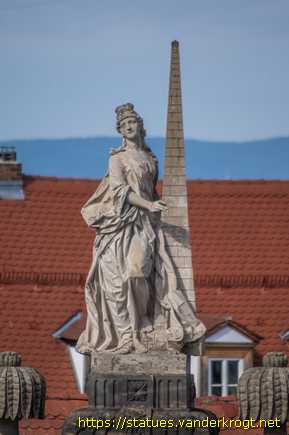
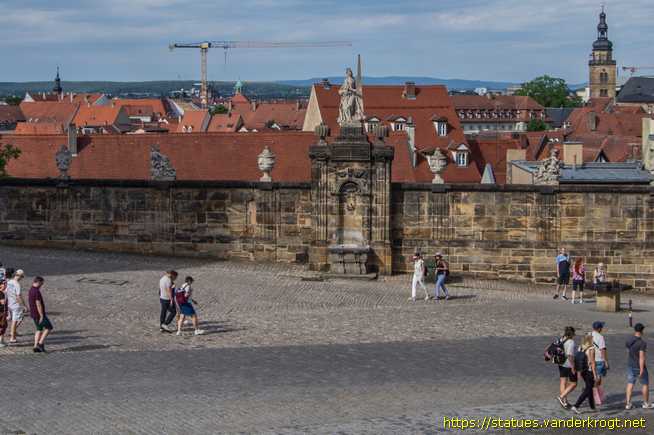
Fortunata-Brunnen und die vier JahreszeitenFortunata Fountain and the Four Seasons |
Michael Trautmann & Georg Joseph Mutschele
ca. 1780 |
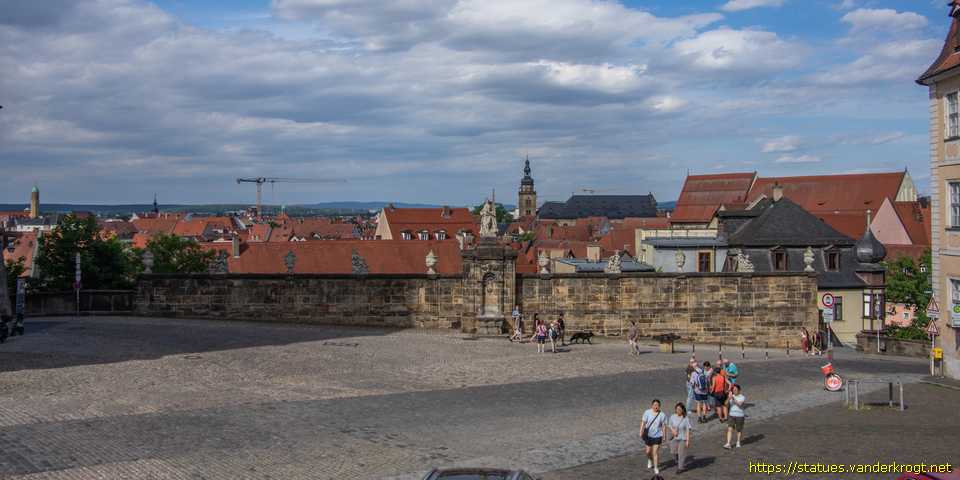
Eine rund 40 Meter lange Mauer am unteren Rand der Bamberger Innenstadt am östlichen Ende des Domplatzes. An der Mauer befinden sich Skulpturen, darunter der Fortunata-Brunnen (1780), von Georg Joseph Mutschele, der von einer weiblichen Figur und einem kleinen Obelisken gekrönt ist, sowie vier Zwei-Kinder-Gruppen von Michael Trautmann, die die vier Jahreszeiten darstellen. Zusammen mit dem Fortunata-Brunnen (der Wohlstand und Glück symbolisiert) bilden diese Allegorien ein typisches ikonografisches Programm des 18. Jahrhunderts: Der Wohlstand und der fortwährende Kreislauf der Natur werden durch den Wechsel der Jahreszeiten dargestellt.
A wall approximately 40 metres long forming the lower boundary of Bamberg’s city centre at the eastern end of Cathedral Square. The wall features sculptures, including the Fortunata Fountain (1780) by Georg Joseph Mutschele, which is crowned by a female figure and a small obelisk, and four Two-Children-Groups by Michael Trautmann, representing the four seasons. Together with the Fortunata Fountain (which symbolises prosperity and good fortune), these allegories form a typical 18th-century iconographic programme: prosperity and the continuous cycle of nature are depicted through the succession of the seasons.
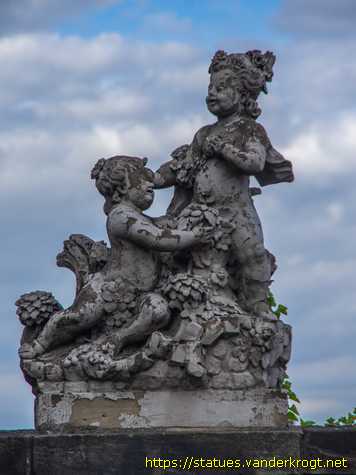 Frühling – Putten mit Blumen oder Blütenzweigen. Spring – putti with flowers or blossoming branches. |
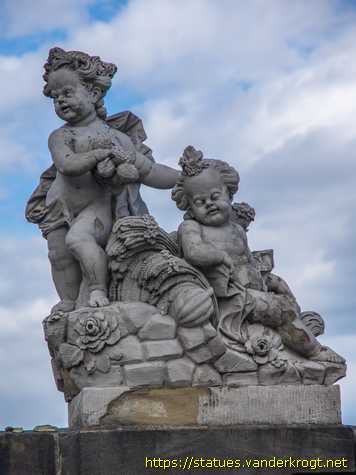 Sommer – Putten mit Ähren. Summer – putti with ears of corn. |
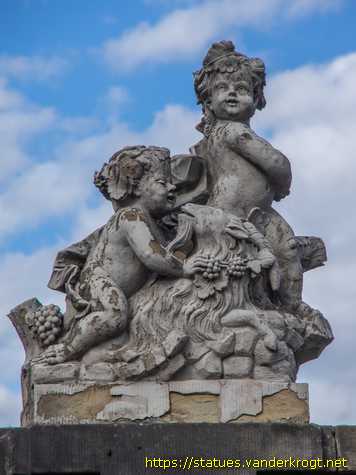 Herbst – Putten mit Weintrauben und ein Bock. Autumn – putti with grapes and a goat. |
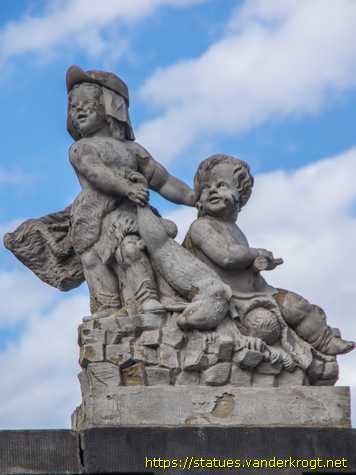 Winter – Zwei Putten, der eine mit einem Pelzmantel und einem Tier, der andere mit einem unbekannten Gegenstand. Winter – Two putti, one wearing a fur cloak and holding an animal, the other holding an unidentified object. |

Your banner here? Click for information.